
TABLE OF CONTENTS
- What Is Smart Home Automation?
- Best Smart Home Automation Devices for a Modern Home
- Smart Lights and Bulbs
- Smart Plugs and Switches
- Smart Speakers and Home Hubs
- Smart Security Cameras
- Smart Sensors
- Smart Doorbells and Smart Locks
- Smart Appliances
- Matter and Smart Home Compatibility
- Google Home, Apple Home and SmartThings
- How to Choose the Right Smart Home Devices
- Common Smart Home Buying Mistakes
- A Simple Smart Home Setup for Beginners
- Frequently Asked Questions
- Conclusion
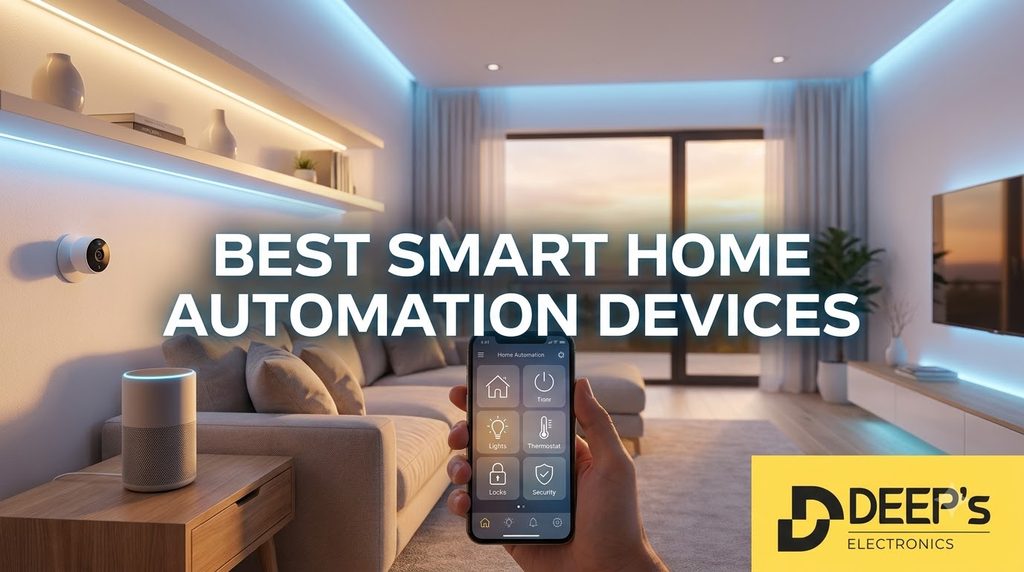
What Is Smart Home Automation Devices?
Smart home automation means connecting household devices so they can be controlled through apps, voice commands, schedules or automated routines. Instead of manually operating every device, homeowners can create actions based on time, activity or other connected devices.
For example, a bedtime routine could switch off selected lights, turn off compatible appliances and activate security devices. A morning routine could turn on lights and start selected devices at a scheduled time.
The Best Smart Home Automation Devices should make these routines simpler rather than making the home unnecessarily complicated.
The right smart-home setup does not need to contain dozens of gadgets. A few well-chosen products can provide useful automation while keeping the system easy to understand.
Best Smart Home Automation Devices for a Modern Home
There are many categories of connected home products, but beginners do not need to buy everything at once. Start with devices that provide an obvious benefit.
| Device | Main Use | Common Benefit |
|---|---|---|
| Smart Bulbs | Lighting | Remote control and schedules |
| Smart Plugs | Appliances | Automated power control |
| Smart Switches | Lighting | Room-level control |
| Smart Speakers | Voice control | Hands-free commands |
| Security Cameras | Monitoring | Remote viewing |
| Motion Sensors | Automation | Activity-based routines |
| Door Sensors | Security | Open/close alerts |
| Smart Doorbells | Entry monitoring | Visitor notifications |
| Smart Locks | Access | Keyless entry |
| Smart Appliances | Appliance management | Connected controls |
The Best Smart Home Automation Devices for one family may be different from those needed by another. A family focused on security may prioritise cameras and sensors, while another household may prefer lighting and appliance automation.
The important thing is to identify your actual requirements before spending money on connected products.
Smart Lights and Bulbs
Smart lighting is one of the easiest ways to start home automation. Smart bulbs can provide app-based control, scheduling, dimming and, on supported models, colour adjustment.
Before buying a smart bulb, check the fitting type, brightness, colour temperature, connectivity and compatibility with your preferred platform.
A simple routine can turn selected lights on at a particular time or switch them off at bedtime. Motion-based lighting can also be useful in hallways, staircases and other areas where automatic illumination is convenient.
For many beginners, smart bulbs are among the Best Smart Home Automation Devices because they are easy to understand and can provide an immediate everyday benefit.
You can also create different lighting routines for different situations. For example, brighter lighting can be used during working hours, while softer lighting can be scheduled for evenings.
Smart Plugs and Switches
Smart plugs can add remote control to selected ordinary electrical devices. A lamp, for example, may be scheduled to turn on at a specific time.
However, a smart plug does not automatically make every appliance smart. Always check the electrical rating of the plug and confirm that the connected appliance is suitable for automated power control.
Smart switches are another option, especially when you want to automate existing room lighting instead of replacing individual bulbs.
When comparing the Best Smart Home Automation Devices, check whether the product requires a separate hub and whether it supports your preferred voice assistant or smart-home platform.
Smart plugs can be particularly useful for lamps, selected small appliances and other suitable devices. They should not be treated as a universal solution for every high-power appliance.
Smart Speakers and Home Hubs
A smart speaker or home hub can become the central control point for compatible devices. Depending on the ecosystem, users can control lights, plugs, cameras and other products through voice commands or routines.
Google Home, Apple Home and Samsung SmartThings are among the major smart-home ecosystems. Compatibility varies by product, so checking the exact model is important.
The Best Smart Home Automation Devices should work together smoothly. A device that works well independently may still be inconvenient if it requires a separate app or does not support your existing ecosystem.
A central smart-home platform can also make routines easier to manage. Instead of opening several different applications, compatible products can potentially be controlled from one ecosystem.
Smart Security Cameras
Smart cameras can help homeowners monitor selected areas of their property through a smartphone or compatible display.
Depending on the model, features may include:
- Live viewing
- Motion notifications
- Night vision
- Two-way audio
- Person detection
- Cloud storage
- Local storage
Before choosing a camera, check whether a subscription is required, where recordings are stored, how long footage is retained and what privacy controls are available.
For security-focused households, cameras can be among the Best Smart Home Automation Devices, but they should always be configured with strong passwords, updated software and appropriate privacy settings.
Indoor and outdoor cameras may have different installation and weather-resistance requirements, so choose according to the intended location.
Smart Sensors
Sensors can make automation more intelligent.
Door and window sensors can detect whether an entry point is open or closed, while motion sensors can detect activity in a particular area.
For example, a hallway light could be programmed to switch on when motion is detected during the evening. A door sensor could send an alert when a particular entry point opens.
Sensors are especially useful when you want automation to respond to what is happening inside the home instead of following only fixed schedules.
They can also work as supporting devices for larger routines. A motion sensor, for example, can trigger selected lights without requiring someone to operate a switch manually.
Smart Doorbells and Smart Locks
Smart doorbells combine visitor monitoring with connected notifications. Depending on the model, homeowners can receive alerts, view visitors and communicate through the device.
Smart locks can provide features such as access codes, smartphone control or biometric authentication on supported products.
Security should be the priority when selecting these products. Check emergency access methods, battery backup, mechanical override options and compatibility with your door.
For households looking to improve both convenience and entry management, these can be valuable Best Smart Home Automation Devices.
Before installing a smart lock, make sure the product is compatible with the existing door, lock mechanism and installation requirements.
Smart Appliances
Smart appliances are becoming an important part of connected homes. Depending on the product, a connected appliance may offer remote monitoring, notifications, scheduling, energy-management features or device-status information.
Examples can include:
- Smart refrigerators
- Connected washing machines
- Smart air conditioners
- Connected kitchen appliances
- Other compatible home appliances
If you are already planning to replace a major appliance, it can make sense to compare smart features at the same time.
However, do not pay extra for connected functions you are unlikely to use. The Best Smart Home Automation Devices should provide useful automation rather than technology that adds complexity without a practical benefit.
When comparing smart appliances, also consider energy consumption, capacity, installation requirements, service support and warranty.
Matter and Smart Home Compatibility
Matter is an industry standard designed to improve interoperability between compatible smart-home products and platforms.
Matter can be useful for shoppers who want flexibility instead of being locked into one manufacturer’s ecosystem. However, Matter compatibility does not mean that every advanced feature will work identically across every platform.
Before purchasing, check:
- Matter compatibility
- Supported smart-home platforms
- Wi-Fi support
- Thread support where applicable
- Hub or border-router requirements
- Manufacturer app requirements
Compatibility is one of the most important factors when selecting the Best Smart Home Automation Devices.
A product may support Matter while still requiring specific hardware or software for certain features. Therefore, always check the manufacturer’s compatibility information before buying.
Google Home, Apple Home and SmartThings
Your existing technology can help determine which ecosystem makes the most sense.
Google Home
Google Home supports compatible smart lights, plugs, cameras, sensors, appliances and Matter devices. Compatible Google Home hardware can also provide control for supported Thread-based products.
Apple Home
Apple Home works with compatible HomeKit and Matter accessories. Supported Apple home hubs can help manage automations and connected accessories.
Samsung SmartThings
SmartThings connects compatible Samsung products with supported third-party devices. The platform supports categories such as lights, plugs, switches, sensors, cameras and appliances.
When comparing the Best Smart Home Automation Devices, choose products that fit the ecosystem you already use rather than creating unnecessary app fragmentation.
The platform you select should also match the smartphones, voice assistants and other connected products already present in your home.
How to Choose the Right Smart Home Devices
Start by identifying the problem you want to solve.
Do you want:
- Automated lighting?
- Better home security?
- Remote appliance control?
- Voice commands?
- Energy monitoring?
- Automated routines?
Next, check compatibility with your existing devices. Look at Wi-Fi, Bluetooth, Thread, Matter and platform support.
Then check whether a hub or bridge is required. Some products connect directly to your network, while others need additional hardware.
Security should also be part of the buying decision. Use strong passwords, enable available security features and keep device software updated.
Finally, consider long-term value. A slightly more expensive device with reliable software support and broader compatibility may be more useful than a cheaper product with limited integration.
These factors make it easier to identify the Best Smart Home Automation Devices for your actual requirements instead of simply choosing products based on popularity.
Common Smart Home Automation Devices Buying Mistakes
One common mistake is buying a product without checking compatibility. Another is purchasing too many devices from unrelated ecosystems and ending up with several different apps.
Ignoring hub requirements can also create unexpected costs. Buyers should check whether additional bridges, controllers or subscriptions are needed.
Another mistake is focusing only on specifications. A smart device should be easy for the entire household to operate.
Before purchasing the Best Smart Home Automation Devices, also check warranty, manufacturer support, privacy policies, software updates and replacement options.
It is also important to avoid unnecessary automation. A routine should save time or improve convenience. If a setup becomes difficult to manage, simplify it.
A Simple Smart Home Setup for Beginners
You do not need to automate an entire house immediately.
A practical starting setup could include:
- One smart speaker or compatible hub
- A few smart bulbs
- One or two suitable smart plugs
- One security device if required
- A motion or door sensor for useful automation
After using these products for some time, you can add sensors, switches, doorbells, locks or smart appliances based on actual needs.
This gradual approach helps you understand the ecosystem before making larger investments.
It can also reduce unnecessary spending because you learn which features are genuinely useful in your household.
FAQ
1. What are the Best Smart Home Automation Devices for beginners?
Smart bulbs, smart plugs and a compatible smart speaker or hub are practical starting points. They are relatively simple to understand and can introduce useful routines without requiring major changes to the home.
2. Do smart home automation devices need Wi-Fi?
Not always. Depending on the product, devices may use Wi-Fi, Bluetooth, Thread or another communication method. Always check the manufacturer’s requirements before purchasing.
3. What is Matter?
Matter is a smart-home connectivity standard designed to improve interoperability between compatible devices and ecosystems. It can help products from different manufacturers work within supported smart-home platforms.
4. Are smart plugs safe?
A smart plug should be used only within its electrical rating and according to the manufacturer’s instructions. Check compatibility before connecting high-power appliances.
5. Can smart home automation devices from different brands work together?
Yes, some products from different manufacturers can work together through supported ecosystems and standards such as Matter. However, compatibility and available features can vary between products.
6. Do smart cameras require a subscription?
Some cameras offer optional or required cloud subscriptions, while others support local storage. Check the specific product’s storage and subscription requirements before purchasing.
7. Should I buy a smart home automation devices hub?
A hub can be useful when you have multiple compatible devices or products that require central coordination. Beginners with a small setup may not always need a separate hub.
CONCLUSION
The Best Smart Home Automation Devices are those that solve genuine household problems while remaining easy to use.
Smart bulbs can simplify lighting, smart plugs can automate selected appliances, cameras can support home monitoring, sensors can trigger routines and smart speakers can provide central voice control.
Compatibility should remain a priority. Matter is helping improve interoperability, while major platforms such as Google Home, Apple Home and Samsung SmartThings continue to support growing categories of connected products.
Instead of buying every gadget available, start with a few useful devices and expand your setup gradually. This approach can make home automation devices more practical, manageable and valuable over time.
Looking to upgrade your home with smart electronics and connected devices? DEEP’S ELECTRONICS can help you explore suitable home electronics and smart solutions according to your requirements, budget and existing setup. Compare compatibility, features and everyday usefulness before choosing your next smart-home product.