
A battery-powered ride-on car can turn ordinary playtime into an exciting driving experience. Children can enjoy pretend driving, explore controlled play spaces and engage with a toy that combines movement with imaginative play.
However, choosing a Kids Electronics Car should involve more than selecting the most attractive design.
Parents need to consider the child’s age, physical size, ability to operate the controls, available riding space, battery system, storage requirements and the manufacturer’s instructions.
The term Kids Electronics Car is often used online when people are searching for a Kids Electric Car or battery-operated ride-on car. For parents, the important thing is understanding the actual product rather than relying only on the name used in a listing.
This guide explains what to check before purchasing one and how to compare different ride-on car options more practically.
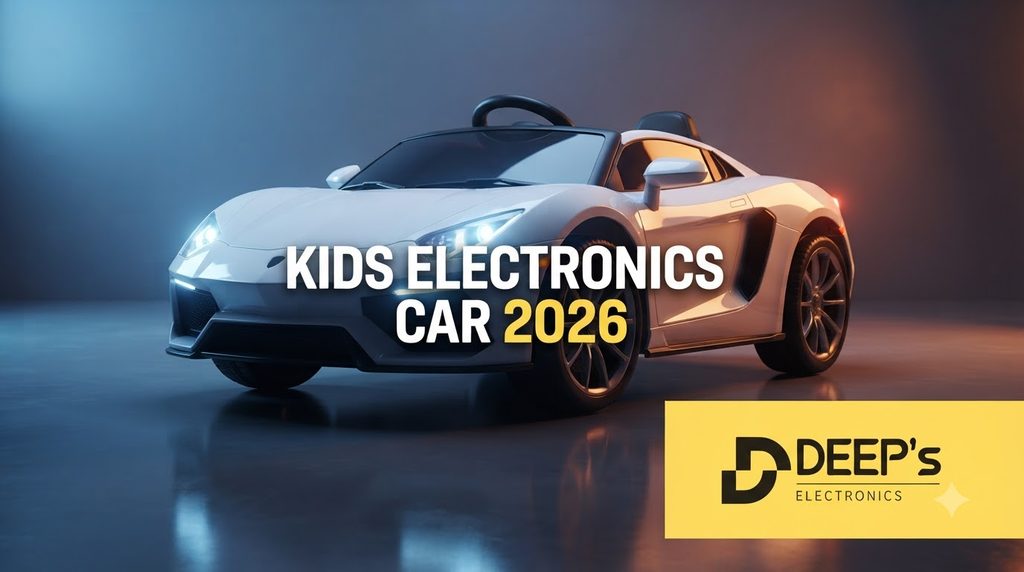
Table of Contents
- What Is a Kids Electronics Car?
- Why Kids Electric Cars Are Popular
- Main Types of Kids Electric Cars
- How to Choose the Right Size
- Age and Child Ability
- Battery and Charging
- Controls and Driving Experience
- Indoor or Outdoor Use
- Safety Considerations
- Maintenance and Storage
- What to Check Before Ordering Online
- DEEP’S ELECTRONICS and Kids Electric Cars
- FAQs
- Conclusion
1. What Is a Kids Electronics Car?
A Kids Electronics Car generally refers to a battery-powered ride-on vehicle designed for children.
Unlike a traditional toy car that a child simply pushes, an electric ride-on car uses a rechargeable battery and motor to provide powered movement.
Depending on the individual model, a kids electric car may have features such as:
- Battery-powered movement
- Forward and reverse controls
- Steering wheel
- Pedal or button controls
- Seats
- Headlights
- Horn or sound functions
- Music or entertainment features
- Parent-control functionality on selected models
The exact features vary by product, so parents should always check the individual product description and specifications.
The Kids Electronics Car category can therefore include products with very different sizes, designs and control systems.
2. Why Kids Electric Cars Are Popular
One reason kids electric cars remain popular is their combination of pretend play and physical activity.
A child can imagine driving a car, going on an adventure or taking a family-style trip while remaining within a controlled play environment.
The American Academy of Pediatrics notes that toys involving physical activity, including ride-on toys, can support physical development and opportunities for interaction during play.
A ride-on car can also encourage imaginative play.
For parents, however, the key is to make sure the toy is appropriate for the child’s abilities and the intended environment.
The Kids Electronics Car should be treated as a powered ride-on toy rather than simply as a decorative toy.
3. Main Types of Kids Electric Cars
Not every electric ride-on car is designed in the same way.
Single-Seat Ride-On Cars
These are designed primarily around one child and can be suitable where compact size is important.
Larger Ride-On Cars
Some products have larger bodies and more spacious seating arrangements. These may require additional storage and riding space.
Realistic Car-Style Ride-Ons
These imitate the appearance of familiar vehicle designs and can make pretend play more immersive.
Off-Road-Style Ride-Ons
Some models use SUV, jeep or adventure-inspired designs for outdoor-style imaginative play.
Parent-Controlled Models
Some products include an additional control system that allows an adult to influence or manage the vehicle, depending on the specific model.
Before purchasing a Kids Electronics Car, parents should identify which type actually matches the child’s age, size and intended usage.
4. How to Choose the Right Size
Size is one of the most overlooked factors when purchasing a ride-on car online.
A product can look perfect in photographs but be unsuitable if the child cannot sit comfortably or the vehicle does not fit the intended riding area.
Check:
| Measurement | Why It Matters |
|---|---|
| Overall length | Determines storage and riding space |
| Overall width | Important for doors and pathways |
| Overall height | Helps assess indoor suitability |
| Seat area | Affects child’s comfort |
| Ground clearance | Relevant to the intended surface |
| Product weight | Important for moving and storage |
Parents should also consider the child’s physical size rather than relying only on age.
The CPSC’s guidance for ride-on toys emphasizes stability and age-appropriate design, with physical characteristics and developmental abilities being relevant to selecting suitable ride-on products.
Therefore, a Kids Electronics Car should be checked against the actual dimensions provided by the manufacturer.
5. Age and Child Ability
Age guidance is important when selecting any children’s toy.
Parents should read the manufacturer’s recommended age range and consider whether the child can understand and operate the controls appropriately.
The CPSC recommends following age guidance and selecting toys that match each child’s interests and abilities.
This means age should be considered together with:
- Physical size
- Coordination
- Ability to follow instructions
- Understanding of controls
- Balance
- Reaction to obstacles
- Ability to stop when instructed
A more advanced Kids Electronics Car is not automatically a better choice for a younger child.
The right product is the one the child can use appropriately under the manufacturer’s guidance.
6. Battery and Charging
The battery is one of the most important components of an electric ride-on car.
Before buying, parents should check the product information for:
- Battery type
- Voltage information
- Charging requirements
- Charger information
- Recommended charging procedure
- Battery replacement information
- Storage instructions
Do not assume that chargers are interchangeable simply because their connectors appear similar.
Use the charging equipment and procedure specified by the manufacturer.
CPSC guidance identifies battery-operated toys as products subject to specific labeling and instructional requirements, reinforcing the importance of reading the supplied information.
Parents should also keep charging equipment away from inappropriate child access and follow the manufacturer’s charging instructions.
For a Kids Electronics Car, proper battery care can help maintain the product and reduce avoidable charging-related problems.
7. Controls and Driving Experience
Before buying a ride-on car, understand how the child will actually operate it.
Possible controls can include:
- Steering wheel
- Pedal
- Forward/reverse selector
- Start/stop control
- Remote control
- Speed-selection functions on selected models
The exact control system differs between products.
A child who has never used a powered ride-on toy may need more supervision while learning how the controls work.
Parents should explain basic operating rules before the first ride.
For example:
Stop → Look → Steer → Move
This simple sequence can help children understand that controlling the vehicle is more important than simply making it move.
The Kids Electronics Car should always be used according to its manufacturer’s instructions.
8. Indoor or Outdoor Use
Where the car will be used should influence your purchase.
Indoor Use
If you plan to use a ride-on car indoors, consider:
- Room size
- Doorway width
- Furniture
- Flooring
- Turning space
- Noise
- Storage
A large ride-on car may not be practical inside a small room.
Outdoor Use
Outdoor play may provide more space, but parents still need to choose a controlled environment.
Avoid areas with:
- Road traffic
- Stairs
- Deep slopes
- Water
- Open pools
- Dangerous obstacles
- Uncontrolled vehicle movement
CPSC guidance recommends supervision and appropriate safety practices for riding toys, including the use of helmets and other safety gear where appropriate.
A Kids Electronics Car should be used in a controlled area appropriate for the specific product.
9. Safety Considerations
Safety should be part of the buying decision from the beginning.
Follow Age Guidance
Do not ignore the manufacturer’s age recommendations.
Check Stability
Ride-on toys should have an appropriate stable design. CPSC toy-safety requirements include stability and overload considerations for ride-on toys.
Inspect Before Use
Check wheels, steering components, body panels, battery connections and other important parts.
Use Appropriate Safety Gear
For riding toys where helmets are appropriate, children should use properly fitted protective equipment. CPSC specifically recommends helmets for scooters and other riding toys.
Supervise
Younger children may require closer adult supervision.
Keep Away From Roads
A powered children’s ride-on toy should not be treated as a road vehicle.
Stop Using Damaged Products
If an important component becomes damaged or stops working correctly, discontinue use until the issue is properly addressed.
These precautions are more important than choosing a particular design or color.
10. Maintenance and Storage
A Kids Electronics Car requires basic care after purchase.
Parents should periodically inspect:
- Wheels
- Steering
- Battery compartment
- Charger
- Electrical connections
- Body panels
- Seat
- Controls
Keep the vehicle in a suitable storage location when not in use.
If the manufacturer provides specific instructions for battery storage, charging or cleaning, follow those instructions.
Avoid modifying the electrical system or replacing components with unsuitable alternatives.
Regular inspection can help identify problems before the child uses the toy again.
11. What to Check Before Ordering Online
Online shopping makes it easier to compare several products, but parents should read beyond the product title.
Before ordering a Kids Electronics Car, check these details:
Product Dimensions
Make sure the vehicle will fit your intended storage and riding area.
Recommended Age
Confirm the manufacturer’s stated age guidance.
Weight Guidance
Check the product’s stated child-weight or load information where provided.
Battery Information
Understand the battery and charging system.
Control Method
Check whether the child, parent or both have control depending on the model.
Assembly
Some ride-on products may require assembly.
Delivery Packaging
Larger products can require more space for receiving and unpacking.
Warranty or Support
Read the seller’s and manufacturer’s applicable terms before purchasing.
This checklist can prevent many avoidable mistakes.
12. DEEP’S ELECTRONICS and Kids Electric Cars
DEEP’S ELECTRONICS, the online brand of Shree Mahalaxmi Electronics, focuses on electronics and kids electric toys, including categories such as kids electric cars, bikes, scooters, ride-on jeeps and other battery-operated ride-on products.
For parents looking for a Kids Electronics Car, the product should be compared on practical factors rather than appearance alone.
Before ordering, check the actual product dimensions, age suitability, battery information, control system, intended riding environment and available storage space.
DEEP’S ELECTRONICS provides an online shopping route for customers researching these categories, while Shree Mahalaxmi Electronics represents the associated physical electronics business.
13. FAQs
1. What is a Kids Electronics Car?
A Kids Electronics Car generally refers to a battery-powered children’s ride-on car. The more common product term is Kids Electric Car.
2. What should I check before buying a Kids Electric Car?
Check age guidance, dimensions, weight information, battery specifications, controls, riding environment, storage requirements and manufacturer instructions.
3. Can kids electric cars be used indoors?
Some products may be suitable for indoor use if the manufacturer permits it and sufficient space is available. Always consider the vehicle’s size and the safety of the environment.
4. Do parents need to supervise children using electric ride-on cars?
Parents should follow the manufacturer’s supervision guidance. Younger children and children learning to use powered ride-on toys may require closer supervision.
5. How important are the dimensions of a Kids Electric Car?
They are very important. The vehicle needs to fit both the child and the intended riding and storage area.
6. What type of battery does a Kids Electric Car use?
Battery type varies by product. Always check the individual product specifications and use the charging equipment and procedure recommended by the manufacturer.
7. Is a bigger electric car better for kids?
Not necessarily. A larger vehicle may require more space and may not be appropriate for every child. Suitability depends on age, size, ability and the product’s manufacturer guidance.
14. Conclusion
A Kids Electronics Car can be an exciting addition to a child’s playtime, but choosing one requires more thought than simply selecting an attractive design.
Parents should consider the child’s age and abilities, product dimensions, battery system, controls, riding environment, storage space and safety instructions.
The CPSC recommends following age guidance, matching toys to children’s abilities and supervising the use of electric toys. Its toy-safety guidance also includes specific considerations for ride-on toys and battery-operated products.
The most practical approach is to compare the actual product specifications and determine whether the vehicle fits your child’s needs and your home environment.
For families researching kids electric cars and other battery-operated ride-on toys, DEEP’S ELECTRONICS provides an online destination for exploring relevant categories while remaining connected to Shree Mahalaxmi Electronics.