
TABLE OF CONTENTS
- Why Kids Ride On Cars Are Popular
- The Child-Car Fit Test
- Single-Seater or Two-Seater?
- Think About Where the Car Will Be Used
- Battery and Charging Basics
- Controls Parents Should Understand
- Safety Comes Before Features
- What to Compare When Shopping Online
- Which Features Are Actually Useful?
- Mistakes Parents Should Avoid
- Care and Maintenance
- FAQs
- Final Buying Checklist
- Conclusion
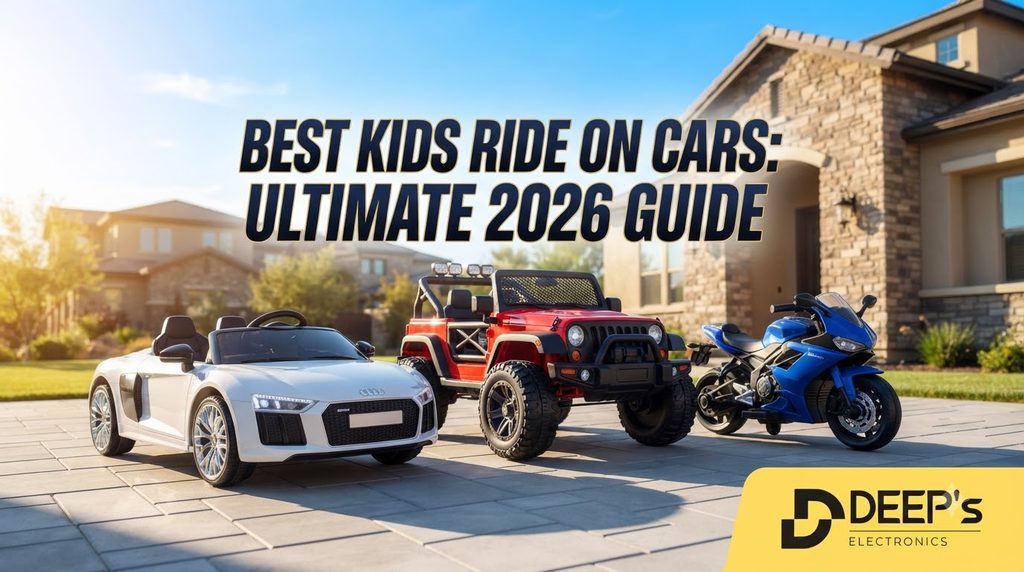
Best Kids Ride On Cars: Ultimate 2026 Buying Guide
Choosing the Best Kids Ride On Cars is not simply a matter of finding the most attractive miniature vehicle. Parents have to think about the child’s age, physical size, riding ability, available space and how the toy will actually be used.
A kids ride on car can become a favourite playtime activity because it combines pretend driving with movement and exploration. At the same time, it needs to be treated as a kids ride-on toy that requires appropriate supervision and a suitable environment.
Different models can vary significantly in dimensions, seating, controls, battery systems and included features. Therefore, parents should evaluate the exact product rather than assuming that every kids electric car works in the same way.
This guide provides a practical framework for comparing kids ride on cars before making a purchase.
Why Best Kids Ride On Cars Are Popular
A kids ride on car gives children an opportunity to participate in imaginative vehicle-based play. Children can pretend to drive, explore a defined play area and enjoy a miniature version of a familiar vehicle.
The appeal is not limited to appearance. A suitable ride-on car can also give children an engaging way to practise simple directional concepts under adult supervision.
However, the product should match the child.
CPSC recommends choosing toys according to age recommendations, interests and abilities rather than treating every toy as appropriate for every child.
That principle is particularly important when comparing the Best Kids Ride On Cars, because models that look similar can have different intended age ranges and physical dimensions.
The Child-Car Fit Test
Before comparing colours, designs or entertainment features, perform a simple fit test.
1. Age
Start with the manufacturer’s recommended age range.
2. Physical Size
Check whether the child can sit comfortably within the available seating space.
3. Coordination
Consider whether the child can understand basic steering and movement instructions.
4. Attention
A child should be able to follow simple rules about where and when the vehicle can be used.
5. Experience
A child who has never used a ride-on toy may require more guidance than a child who already understands basic operation.
The objective is not to find the biggest or most powerful-looking vehicle. It is to find a model that the child can use appropriately under supervision.
Single-Seater or Two-Seater?
Seating is one of the most practical differences between ride-on car models.
A single-seater can be suitable when the vehicle is intended for one child. A two-seater design may be relevant for families considering shared play, but parents should never assume that two children can safely use a particular model at the same time.
Always check the manufacturer’s stated seating capacity and user specifications.
| Seating Type | What to Consider |
|---|---|
| Single seat | Suitable when one child is the intended user |
| Two-seat design | Check exact seating and user specifications |
| Larger body design | Verify available space before ordering |
A larger body can also mean more storage requirements, so measurements matter beyond the riding experience.
Think About Where the Car Will Be Used
The intended riding area should influence the purchase from the beginning.
For indoor use, consider whether the car can move through the available space without hitting furniture, walls or other obstacles.
For outdoor use, choose a controlled area that is appropriate for the specific product. Keep children away from roads and traffic.
CPSC advises keeping children using riding toys away from traffic, stairs and swimming pools.
A large open garden may offer more room than a small indoor area, but parents still need to supervise the child and follow the manufacturer’s intended-use instructions.
A Simple Space Check
Before ordering, measure:
- Doorway width
- Storage area
- Turning space
- Available riding area
- Any narrow passages
- Obstacles that could interfere with movement
This five-minute check can prevent an inconvenient purchase later.
Battery and Charging Basics
The battery is one of the most important components of an electric ride-on car.
Parents should review the exact model’s:
- Battery specification
- Charging instructions
- Charger information
- Recommended charging process
- Storage instructions
- Safety warnings
Never assume that the charger from another toy is compatible.
Do not modify the electrical system or attempt to increase performance by changing components without appropriate technical guidance.
CPSC’s electric toy safety guidance advises following instructions and supervising children’s use of electrical toys.
If wiring, connectors, the charger or battery appears damaged, stop using the toy until the issue has been addressed.
Controls Parents Should Understand
Different Best Kids Ride On Cars can use different operating systems.
Depending on the exact model, a kids ride on cars may use child-operated controls or other control arrangements. Some products may have additional parental-control functionality, while others may not.
Never assume that a feature shown on another model is included.
Before buying, identify:
- How the vehicle moves
- How steering works
- How the child stops
- Whether reverse is available
- Whether parental controls are included
- Where the main power controls are located
The exact product description should be treated as the source of truth for these specifications.
Safety Comes Before Features
Safety should be considered before entertainment.
The American Academy of Pediatrics recommends checking toy labels, age suitability and safety information when purchasing toys. It also highlights the importance of appropriate safety considerations for electric toys.
Parents should establish basic rules before the first ride:
- An adult should supervise use.
- The child should remain within the designated riding area.
- The toy should stay away from roads and traffic.
- Stairs and swimming pools should be treated as restricted areas.
- The vehicle should be inspected before use.
- Damaged electrical or mechanical components should not be ignored.
- Safety instructions supplied with the product should be followed.
For riding toys, parents should also consider appropriate protective equipment based on the product and riding environment.
What to Compare When Shopping Online
When looking for the Best Kids Ride On Cars, comparing products using the same checklist is much more useful than scrolling through photographs.
| Buying Factor | What to Check |
|---|---|
| Age suitability | Manufacturer recommendation |
| Dimensions | Length, width and height |
| Seating | Number of intended users |
| Controls | How the vehicle operates |
| Battery | Exact specification |
| Charger | Compatibility and included accessories |
| Usage area | Indoor/outdoor suitability |
| Safety | Instructions and warnings |
| Storage | Available space at home |
If an important specification is missing from a product page, ask before purchasing.
This is especially important for parents who need the vehicle to fit through a specific doorway or store it in a particular room.
Which Features Are Actually Useful?
Modern kids ride on cars can include plenty of entertainment features. But more features do not automatically mean a better product.
Prioritise features that make everyday use easier.
Comfortable Seating
The child should have adequate space for the intended use.
Understandable Controls
Controls should match the child’s ability and the manufacturer’s intended age range.
Suitable Construction
The vehicle should be appropriate for its intended riding environment.
Clear Battery Information
Parents should know exactly how the product is charged and maintained.
Safety Information
Clear instructions and warnings should be available.
Entertainment features such as lights, sounds or decorative details can be considered after these basics have been evaluated.
Avoid These Common Buying Mistakes
Buying Only Because It Looks Realistic
A realistic design can be attractive, but appearance does not tell you whether the product fits the child.
Ignoring Dimensions
A ride-on car that cannot comfortably move through the intended space can become difficult to use.
Assuming Similar Cars Have Similar Specifications
Two visually similar cars can have different batteries, dimensions, controls and seating arrangements.
Choosing Based Only on Price
Price should be considered alongside specifications, construction, intended use and available information.
Forgetting Storage
Parents often think about riding space but forget where the car will be kept when playtime is over.
Care and Maintenance
A ride-on car should be checked regularly.
Parents can visually inspect the wheels, body, steering, controls, battery connections and charger. Follow the manufacturer’s cleaning and storage instructions.
Keep electrical components protected from unsuitable conditions and avoid modifications that were not designed for the product.
If the vehicle develops unusual behaviour, damaged wiring, loose components or other safety concerns, stop using it until the problem has been properly resolved.
Good maintenance is not complicated. A quick inspection before use can help parents identify visible issues early.
Buying Kids Ride On Cars From DEEP’S ELECTRONICS
For parents searching for Best Kids Ride On Cars, product variety is only one part of the buying experience. Clear product information is equally important.
DEEP’S ELECTRONICS, the online brand of Shree Mahalaxmi Electronics, focuses on providing customers with access to electronics and related product categories through its online presence. Within the kids electric toys category, parents can explore ride-on cars and related children’s electric vehicles according to their requirements.
Because specifications can vary from one product to another, always check the individual product listing for the current dimensions, battery information, features, availability and other model-specific details before ordering.
Frequently Asked Questions
1. What are the Best Kids Ride On Cars?
The right ride-on car depends on the child’s age, size, ability, available space and intended use. There is no single model that suits every child.
2. What age is suitable for a kids ride-on car?
It depends on the individual product. Parents should follow the manufacturer’s recommended age range and consider the child’s physical abilities and maturity.
3. Are kids electric cars safe?
They can be used more safely when parents select an age-appropriate product, follow the instructions, supervise the child and use the toy in a controlled environment.
4. Can kids ride electric cars outdoors?
Some models may be suitable for controlled outdoor play. Always follow the manufacturer’s intended-use instructions and keep children away from traffic and other hazards.
5. Should I choose a one-seater or two-seater?
Check the exact product specifications and intended seating capacity. Do not assume a two-seat-looking vehicle is automatically designed for two children.
6. What should I check before buying a battery-operated car for kids?
Check age suitability, dimensions, seating, controls, battery, charger, intended riding area, safety instructions and storage requirements.
7. Do all kids electric cars have the same features?
No. Batteries, controls, dimensions, seating, entertainment features and other specifications can vary significantly between models.
Final Buying Checklist
Before purchasing one of the Best Kids Ride On Cars, ask:
Child
- Is the age recommendation appropriate?
- Can the child comfortably fit?
- Can the child understand basic instructions?
Vehicle
- Are the dimensions suitable?
- Is the seating appropriate?
- Are the controls clearly explained?
- Are the battery and charger specifications available?
Environment
- Is there enough riding space?
- Is there a suitable storage area?
- Can the toy be kept away from traffic and hazards?
Safety
- Have the manufacturer’s instructions been read?
- Will an adult supervise use?
- Are the vehicle and electrical components in good condition?
If the answer to these questions is clear, the comparison process becomes much easier.
Conclusion
Finding the Best Kids Ride On Cars is ultimately about matching the vehicle to the child and the environment rather than choosing the most impressive-looking model.
Age suitability, physical fit, dimensions, seating, controls, battery information, storage and safety should form the foundation of the decision. Entertainment features can then be considered as additional benefits.
Parents should also remember that specifications vary between products. A photograph or general category name cannot confirm a particular battery, speed, remote control, seating capacity or dimension.
For families exploring kids electric toys, DEEP’S ELECTRONICS provides an online destination for discovering relevant ride-on categories, while Shree Mahalaxmi Electronics represents the same business offline. Always verify the exact product specifications and safety information before placing an order.
CTA: Explore kids electric cars and related ride-on toys at DEEP’S ELECTRONICS and compare models according to your child’s age, size, riding area and verified product specifications.